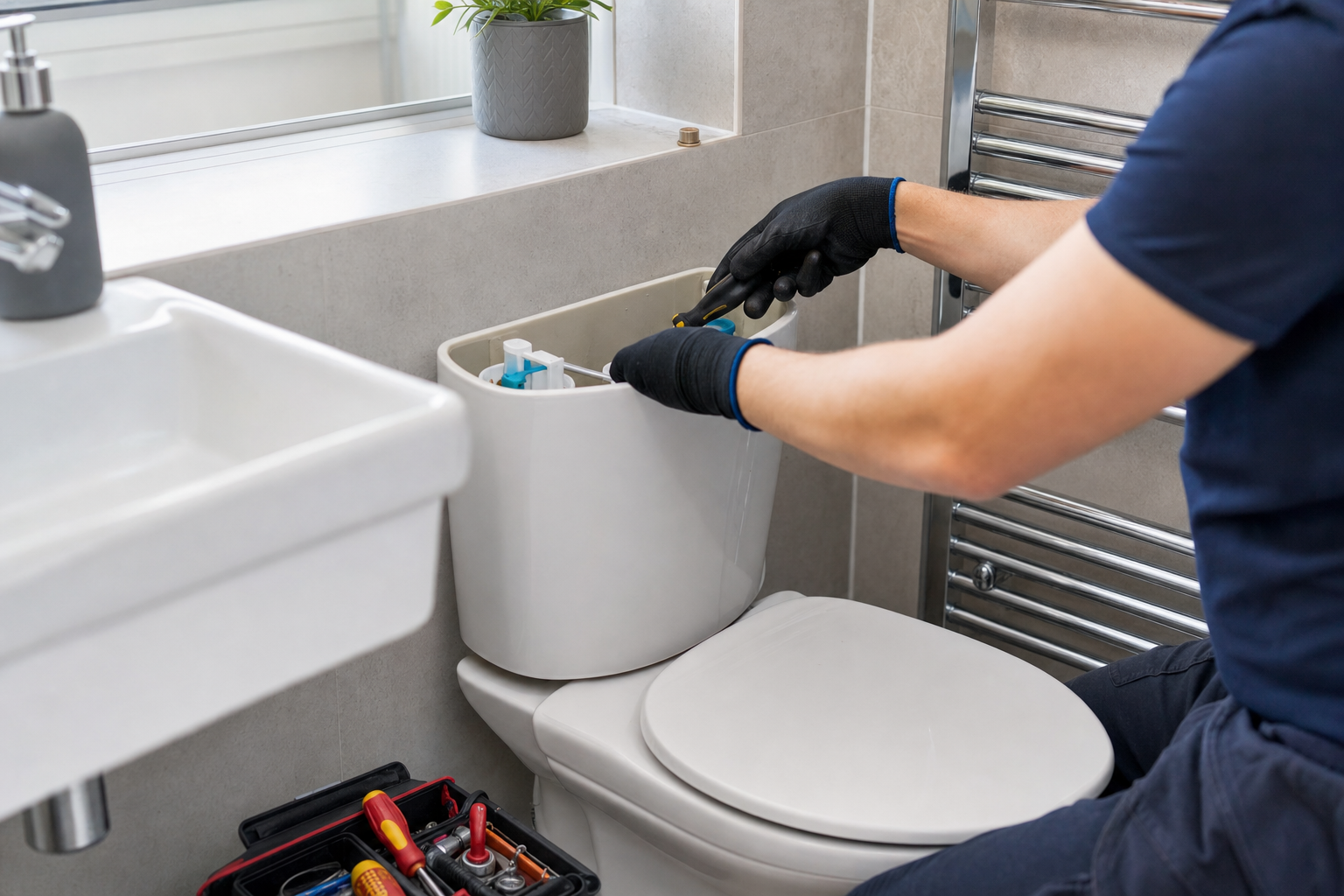
If you need toilet plumbing Camberwell, Fast Fix Plumbers can help with the common faults that make toilets waste water, smell unpleasant, refuse to flush properly, or leak onto floors and ceilings below. Toilet problems are often simple on the surface but involve several parts working together: the pan, cistern, inlet valve, flush mechanism, seals, waste connection and, in some homes, a macerator. When one of those components fails, the symptoms can range from a constant trickle into the bowl to a full blockage or an active leak.
This page is for homeowners, landlords, tenants and local businesses in Camberwell who want a clear explanation of what is likely wrong, what can be checked safely, and what should not be attempted as a DIY repair. We work across Camberwell and nearby areas including Camberwell Green, King's College Hospital, Denmark Hill Station, Burgess Park and Grove Lane.
Our toilet plumbing service covers leaking toilet repairs, toilet flush repairs and replacements, toilet installations and replacements, toilet cistern repairs and replacements and macerator installations and replacements. If the issue is urgent, you can call 020 3633 6856 or request a visit today.
We also support related plumbing work where toilet faults are part of a wider problem, including plumber, emergency plumbing, boiler repairs, boiler installations, central heating, underfloor heating, gas engineers and water leaks. In practice, that matters because a leak seen around a toilet may not be the only issue in the property; it can also indicate failed seals, pipework movement, a blocked waste, or water damage that needs tracing properly rather than being patched over.
Recent local work has included a Camberwell toilet plumbing enquiry where the focus was on diagnosis, safe checks and practical next steps, and a Peckham toilet that was running continuously until the inlet valve and flush mechanism were inspected, adjusted and tested. We also cleared a slow-draining kitchen sink in Camberwell by removing debris from the trap and waste pipe, then flushing and checking free flow. That kind of hands-on plumbing experience is useful because toilet faults often sit alongside drainage issues, scale build-up, worn washers or partial blockages elsewhere in the system.
Before any repair, the first step is to identify the symptom. A toilet that leaks from the base usually points to a failed pan connector, loose fixing, damaged wax-type seal or movement at the waste connection. A toilet that keeps filling or refilling is more likely to have an inlet valve problem, a faulty float, a worn washer or a flush valve that is not seating properly. If the toilet is weak to flush, the issue may be partial blockage, low cistern volume, a worn siphon or a flush plate problem on a concealed cistern. If the toilet is blocked, the safest response depends on whether the blockage is local to the pan or further down the waste line.
Customers often ask what they should check before calling a plumber. You can safely look for visible water around the base, listen for constant filling, note whether the cistern is overflowing, and check whether other fixtures in the property are draining slowly at the same time. It is also sensible to isolate the toilet supply if water is escaping, but only if the stop tap is easy to reach and turns freely. If you are unsure, do not force it. For tenants, it is best to report the issue promptly to the landlord or managing agent, especially if there is active leaking or repeated blockage.
What you should not DIY is just as important. Do not dismantle concealed cisterns, cut into boxing, or remove pan fixings if you have not confirmed how the toilet is sealed. Do not keep flushing a blocked toilet in the hope it will clear itself, because that can cause overflow and damage to flooring. Do not use aggressive chemicals in a blocked pan or macerator, as they can damage seals, pumps and pipework. And do not overtighten plastic fittings, as this can crack parts and create a larger leak than the original fault. A cautious inspection is fine; invasive repair without the right parts and isolation points is where small toilet jobs become expensive ones.
At Fast Fix Plumbers, the aim is to diagnose the component that has failed and repair or replace it in a way that suits the toilet type and the property layout. That might mean a simple washer or valve adjustment, replacement of a flush mechanism, swapping a cistern part, resealing a leaking connection, or fitting a new toilet where the existing unit is beyond economical repair. We also help landlords and local businesses where downtime matters, such as office washrooms, rental flats and shared facilities near Camberwell Green, Denmark Hill Station and the surrounding roads.
If you need a clear answer on a toilet fault in Camberwell, call 020 3633 6856 or email info@plumbers-camberwell.co.uk. We are available 24 hours and can discuss the likely fault, the next step and whether a repair, replacement or further inspection is the right route.
Leaking Toilet Repairs in Camberwell
A leaking toilet can waste water, damage flooring and create staining or mould if it is left unresolved. In Camberwell properties, leaks are often found around the pan base, the cistern-to-pan connection, the inlet valve, or the waste pipe behind the toilet. Sometimes the leak is obvious, with water pooling on the floor. In other cases, the only sign is a damp smell, a swelling skirting board, or water appearing below a ceiling if the toilet is upstairs.
The components most often involved in a leak are the pan connector, cistern bolts, base seal, inlet valve washer and flexible supply hose. A leak from the base does not always mean the toilet itself is cracked; more often, it is a failed seal or a movement issue at the waste connection. That is why diagnosis matters before replacement. A proper inspection looks at the source of the moisture, the condition of the fittings and whether the toilet is moving when used.
Safe checks you can do include drying the area, watching for fresh moisture after flushing, and checking whether the leak appears only when the cistern refills or only when the toilet is used. What you should not do is keep using sealant as a permanent fix or remove floor-level fixings without knowing what is behind them. If a leak is active, isolate the supply if possible and arrange a plumber to inspect it.
For leaking toilet repairs Camberwell customers often need a practical, component-led repair rather than a full replacement. Where parts are worn or the pan is damaged, replacement may be the better option. We can assess the condition and advise on the most sensible fix for the property.
Toilet Flush Repairs and Replacements in Camberwell
Flush faults can show up in several ways: the handle feels loose, the button sticks, the cistern empties too slowly, the flush is weak, or the toilet needs repeated flushing to clear the bowl. In some cases the toilet runs on after flushing, which usually means the flush valve is not sealing properly or the inlet valve is refilling when it should have stopped.
Toilet flush systems vary. Older toilets may use a lever and siphon arrangement, while modern cisterns may use push buttons, dual flush fittings or concealed mechanisms. Because the component design differs, the correct repair depends on the exact model and how it is installed. A flush plate that looks simple from the outside may hide a mechanism that needs careful adjustment, not force.
Typical symptoms that point to flush repairs include intermittent flushing, a hissing cistern, a flush that only partially empties, or water constantly entering the bowl. If the toilet is still flushing but not clearing waste, the fault may be mechanical or it may be linked to a partial blockage in the pan or waste pipe. If the flush handle or button has become stiff, the linkage may be worn or misaligned.
Do not remove concealed flush plates or internal cistern parts unless you are sure how they clip back together. A broken clip or mis-seated seal can create a leak that is harder to trace than the original fault. Our toilet flush repairs and replacements Camberwell service is designed to identify whether the mechanism can be adjusted, whether a part should be changed, or whether the whole flush assembly needs replacing.
Toilet Installations and Replacements in Camberwell
There are times when repair is no longer the best answer. Cracked pans, badly worn cisterns, repeated leaks, poor flush performance and outdated fittings can make toilet replacement more cost-effective than repeated callouts. This is especially relevant where a toilet has already had multiple parts changed and still does not perform reliably.
Toilet installations and replacements in Camberwell should be planned around the property layout, existing soil connection, water supply position and any boxing or tiling that needs to be preserved. A replacement is not only about fitting a new pan; it is about making sure the waste line, cistern position and fixings all work together without creating future leaks or movement.
Customers sometimes try to replace a toilet themselves and discover the waste alignment is wrong, the pan connector does not fit the existing outlet, or the cistern inlet leaves no room for correct operation. That is why this is one of the jobs where DIY can quickly become difficult. If the toilet is in a tight bathroom, an upstairs flat or a commercial washroom, a careful installation matters even more.
We can help with toilet replacements where the existing unit is beyond repair, where a landlord wants a more reliable setup, or where a business needs washroom facilities restored with minimal disruption. If the toilet is being replaced because of a leak, it is also sensible to check surrounding pipework and flooring for damage before the new unit goes in.
Toilet Cistern Repairs and Replacements in Camberwell
The cistern is the part that stores and releases water for the flush, so faults here often cause running water, weak flushing, overfilling or repeated refilling. Common cistern issues include a worn inlet valve, a faulty flush valve, a broken float, limescale on moving parts, a split washer or a damaged cistern lid or button assembly. Concealed cisterns can add another layer of complexity because access is limited.
If your toilet cistern is making noise after every flush, filling too slowly, or overflowing into the bowl, the problem may be with the inlet valve or the water level setting. If the cistern is emptying properly but the toilet still runs, the flush mechanism may not be sealing. In older systems, the parts may simply be worn. In newer systems, the issue may be a replacement part that no longer matches the original specification.
Safe checks include listening for continuous filling, looking for water movement in the bowl when the toilet is not being used, and checking whether the cistern lid is seated correctly. What you should avoid is forcing internal parts, especially on concealed systems where access panels are limited. A broken clip or cracked fitting can turn a minor repair into a full replacement job.
Our toilet cistern repairs and replacements Camberwell service covers both visible and concealed cistern types, with the aim of restoring reliable flush performance and stopping unnecessary water use. Where a cistern is beyond repair or parts are no longer suitable, replacement may be the cleaner long-term solution.
Macerator Installations and Replacements in Camberwell
Macerators are used where a toilet or bathroom installation needs pumped waste discharge rather than a standard gravity outlet. They are useful in certain layouts, but they also introduce extra components that can fail: the pump motor, blades, non-return valve, inlet seals and discharge pipework. When a macerator faults, the symptoms can include noise, failure to start, repeated tripping, poor discharge or unpleasant smells.
Because macerators contain moving parts and are connected to both water and waste, they are not a good DIY project. Opening the unit without isolating it properly can create contamination, electrical risk and a bigger repair. In many cases, the key question is whether the unit can be repaired, whether a blocked discharge line is the real issue, or whether replacement is the more reliable option.
Signs that a macerator may need attention include a humming noise without pumping, frequent resets, water backing up into the toilet, or waste not clearing properly. If the unit has been overloaded with unsuitable waste or chemicals, the internal mechanism may be damaged. The safest step is to stop using the unit and arrange inspection rather than trying repeated flushes.
We provide macerator installations and replacements Camberwell customers can rely on when the existing unit is no longer working properly or when a new installation needs to be set up correctly from the start. As with all toilet plumbing, the right diagnosis saves time and avoids replacing parts that are not actually at fault.
If you need toilet plumbing support in Camberwell, Fast Fix Plumbers is ready to help with practical diagnosis, clear advice and service-specific repairs. Call 020 3633 6856 to speak about your toilet issue, or email info@plumbers-camberwell.co.uk to request a visit. We work 24 hours and cover Camberwell and nearby areas, including Camberwell Green, King's College Hospital, Denmark Hill Station, Burgess Park and Grove Lane.